_edited.png)
Winning a Real Estate Bidding War: Smart Strategies to Stand Out and Secure Your Dream Home

A bidding war can make buying a home feel like trying to grab the last slice of pizza at a party where everyone skipped lunch. You find the house, picture your couch in the living room, mentally plant tomatoes in the backyard, and then, boom, six other buyers want it too.
The good news? Winning does not always mean throwing the most money at the seller until your budget cries uncle. A smart offer is part price, part timing, part trust, and part knowing when to stay cool while everyone else starts waving blank checks around like confetti.
This guide covers practical, beginner-friendly strategies for navigating a competitive real estate situation without losing your mind, your savings, or your ability to enjoy takeout once you move in.

Know the market before you fall in love with the kitchen island
Before making an offer, learn what is happening in the area where you want to buy. Some neighborhoods move fast. Others move at the speed of a sleepy house cat.
Look at recently sold homes, not just homes listed for sale. Asking prices can be wishful thinking. Sold prices show what buyers actually paid.
Pay attention to:
How long homes stay on the market
Whether homes sell above or below the asking price
How many offers sellers tend to receive
Which features get the most attention
Whether sellers are setting low prices to attract multiple offers
For example, imagine two similar homes are listed at $425,000. One neighborhood has homes selling in three days for $450,000. Another has homes sitting for three weeks and selling for $415,000. Same price tag, very different game.
This is where a good real estate agent earns their keep. They can look at local sale patterns and tell you if a listing price is realistic, low on purpose, or floating in fantasyland with a tiny umbrella drink.
A bidding war is easier to handle when you know if you are stepping into a sprint, a marathon, or a pie-eating contest with paperwork.
Set your budget like a grown-up, even if the house has a dreamy pantry
The most dangerous phrase in a bidding war is, “Just a little more.”
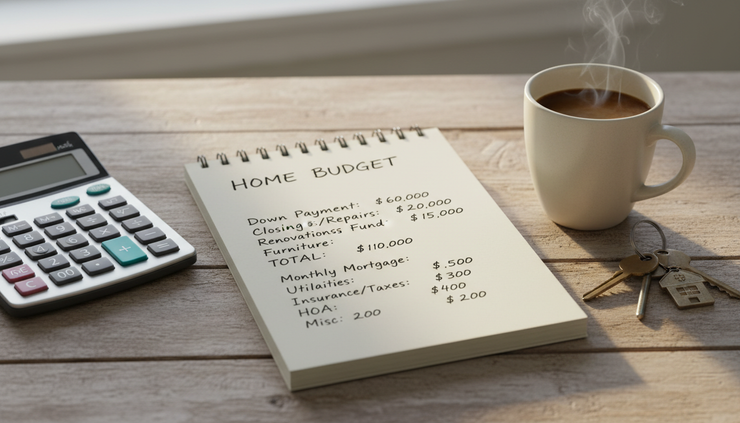
A little more can turn into a lot more quickly. Before you make any offer, decide your true maximum price. That number should include the monthly payment, property taxes, insurance, expected repairs, and everyday life. Groceries still exist after closing day. So do birthdays, dentist visits, and that mysterious car noise you keep pretending not to hear.
Start with three numbers:
Your comfortable price
This is the amount that lets you sleep at night.
Your stretch price
This is higher, but still manageable if the home is a strong fit.
Your walk-away price
This is the line you do not cross, even if the backyard has string lights and a fire pit.
A real-life example helps. A newly married couple shopping in a competitive suburb loved a home listed at $390,000. Their lender said they could technically go higher, but after looking at child care plans, student loans, and their goal of keeping a travel fund, they capped themselves at $410,000. The home sold for $425,000. They were disappointed for a week. Then they found another home at $405,000 with a better layout and no budget hangover.
That is not losing. That is dodging a very expensive banana peel.
Make your offer clean, clear, and easy to say yes to
When sellers compare offers, price matters. Of course it does. But price is not the only thing on the table. Sellers also care about risk, timing, and whether the deal feels likely to close smoothly.
Think of your offer like a resume for your money. It should look serious, organized, and not like it was assembled in the parking lot while eating fries.
Get fully ready before you offer
Before shopping seriously, talk to a lender and get a written confirmation that you are likely able to borrow the money needed. This is often called a pre-approval letter. In plain English, it tells the seller, “A lender has looked at this buyer’s finances, and this offer is not powered by hopes and vibes.”
Your agent can include that letter with your offer. It will not guarantee success, but it helps show you are ready.
Offer a strong deposit if you can
A deposit is money you put forward after the seller accepts your offer. It shows commitment. If the sale goes through, it usually counts toward your purchase. Rules vary by state, so ask your agent how it works where you live.
A larger deposit can make your offer look stronger, if you can afford it and understand the rules. Do not throw money into the ring without knowing what happens if the deal falls apart.
Keep requests reasonable
In a slower market, buyers may ask sellers to fix many items, pay certain costs, or include extras like appliances or furniture. In a bidding war, a long wish list can weaken your offer.
That does not mean you should ignore serious problems. Safety, structure, and major systems matter. But asking for the patio furniture, the wall mirror, the garage fridge, and the garden gnome named Steve might make the seller choose someone else.
Consider a price increase clause carefully
Some buyers use a clause that automatically raises their offer if another buyer offers more, up to a limit. For example, you might offer $400,000 but agree to go up to $415,000 if needed.
This can help, but it should be handled carefully. You need a clear top number. You also need your agent to explain how proof of another offer works. Do not use this unless you fully understand it.
This is one of those moments where “sure, sounds fine” is not a strategy. It is how people end up sweating into their inspection report.
Stand out without writing a reality show audition
Many buyers wonder if they should write a personal letter to the seller. Sometimes a warm note can help, especially if the seller has strong feelings about the home. But there is a catch.
In many places, agents discourage personal letters because they can reveal details sellers should not consider, such as family status, religion, age, or other personal traits. Sellers should pick an offer based on fair terms, not on who tells the most emotional story.
So how do you build rapport the right way?
Let your agent communicate well
A friendly, professional agent can make a big difference. They can ask what matters most to the seller, explain why your offer is strong, and respond quickly. Sellers and their agents often prefer buyers who seem organized and easy to work with.
For example, a seller might care less about the absolute highest price and more about closing on a date that lines up with their next move. If your agent asks that question early, your offer can match what the seller needs.
Show respect for the home
If you attend a showing, be thoughtful. Take off shoes if asked. Do not insult the decor out loud. Walls have ears, and sometimes so do video doorbells.
Saying, “We’d rip out this kitchen immediately,” while standing in someone’s beloved kitchen is not exactly a charm offensive. Keep reactions polite and save your full commentary for the car.
Keep the message focused on the deal
If your side sends a note, keep it simple and tied to the home, not personal identity. Something like:
“We appreciate how well the home has been cared for and are ready to move forward on the seller’s preferred timeline.”
Short. Respectful. No violins required.

Be flexible where it helps, but do not gamble with the basics
Flexibility can win bidding wars. Sellers often have their own stress. Maybe they need extra time to move. Maybe they already bought another home. Maybe they want a simple sale because they have packed 47 boxes and can no longer find the toaster.
Here are helpful ways to be flexible.
Match the seller’s ideal closing date
The closing date is the day the sale becomes final. Some sellers want to move fast. Others need more time.
If you can match their preferred timing, your offer may stand out even if it is not the highest. This is especially useful when the seller is buying another home and trying to coordinate both moves.
Offer a short rent-back period if it makes sense
A rent-back means the seller stays in the home for a short time after closing and pays you rent. This can be attractive to sellers who need a few extra days or weeks.
This arrangement needs clear rules in writing. Ask your agent and lender before agreeing. You want helpful, not “surprise, I am suddenly a landlord with moving boxes in my hallway.”
Be careful with skipping protections
Some buyers try to win by giving up inspections or other protections. That can make an offer more appealing, but it can also be risky, especially for first-time buyers.
A home inspection is when a trained person checks the condition of the house. It can reveal roof issues, plumbing problems, electrical concerns, or heating and cooling trouble. Skipping it entirely may help win the house, then hand you a repair bill with the emotional range of a horror movie.
A safer middle ground might be:
Agreeing to a shorter inspection timeline
Saying you will not ask for small repairs
Keeping the right to walk away if a major issue appears
Doing a pre-offer inspection if allowed and practical
Ask your agent what is common and safe in your area. The goal is to be competitive without playing financial dodgeball blindfolded.
Use professionals like your home-buying pit crew
A strong agent, lender, and inspector can help you move quickly and avoid mistakes. Think of them as your pit crew. You are still driving the car, but they help keep the wheels from flying off.
A good agent helps you read the situation
The right agent can tell you:
Whether the home is priced low to attract attention
How many offers may be coming in
What terms the seller might prefer
What similar homes have sold for
When to push and when to walk away
They can also call the seller’s agent and ask smart questions. Sometimes the winning detail is not price. It is timing, certainty, or fewer hassles.
A responsive lender helps you move fast
In a hot market, delays can cost you. A lender who answers quickly and provides updated letters can strengthen your offer. Ask early how fast they can respond if you need to adjust your offer on a weekend.
Real estate does not always respect business hours. Houses enjoy becoming urgent at 7:43 p.m. on a Sunday.
An inspector helps protect your future wallet
Even if the market is intense, do not treat the inspection like an optional side quest. A good inspector can help you understand what you are buying and what repairs may come later.
This content is for general information only and should not replace advice from a licensed real estate, legal, tax, or lending professional in your state.
Know when to walk away with your dignity and snack budget intact
One of the smartest bidding-war strategies is knowing when not to win.
That sounds weird, because the whole point is buying the house, right? Still, not every house is worth stretching beyond comfort. A dream home can become a stress home if the payment eats every spare dollar.
Watch for these signs that it may be time to step back:
The price has moved beyond your walk-away number
You feel pressured to skip protections you do not understand
The monthly payment makes you nervous
You are ignoring major repair concerns
You are bidding mainly because you hate losing
That last one is sneaky. Bidding wars turn homes into competitions, and competition can make brains do goofy things. Suddenly you are fighting for a house because another buyer wants it, not because it fits your life.
A buyer in the Midwest once lost three homes in a row, then nearly offered well above budget on a fourth just to be done. Their agent talked them through the actual numbers. They paused, regrouped, and later bought a house with a shorter commute and a better yard. The fourth house? It needed a new roof within months. Sometimes losing is the universe wearing a hard hat.
A simple game plan for your next offer
If you are wondering How to Win a Bidding War without turning into a stressed-out spreadsheet goblin, start with this plan:
Learn what homes are really selling for in your target area.
Set your comfortable price, stretch price, and walk-away price.
Get your lender documents ready before touring seriously.
Ask what matters most to the seller.
Write a clean offer with strong, simple terms.
Stay flexible on timing when you can.
Keep key protections in place unless you understand the risk.
Let your agent guide the strategy.
Walk away when the numbers stop making sense.
The best offer is not always the biggest. It is the one that gives the seller confidence and still lets you enjoy your life after moving day.
FAQ
Do I need to offer above the asking price to win?
Not always. In some markets, yes, homes often sell above asking. In others, strong terms and flexible timing can matter just as much. Look at recent local sales before deciding.
Should I skip the home inspection to make my offer stronger?
Be very careful. Skipping an inspection can expose you to expensive surprises. A shorter inspection period or a promise not to ask for minor repairs may be safer.
Can a first-time buyer really compete with cash buyers?
Yes, but preparation matters. A strong lender letter, fast communication, flexible timing, and a clean offer can help you compete. Cash is attractive, but sellers also care about reliability.
How do I avoid overpaying in a bidding war?
Set a walk-away price before emotions take over. Base it on your budget, similar home sales, and future costs, not just the fear of losing.
What if I keep losing offers?
Take a breath and review the pattern. Your price, timing, deposit, or offer terms may need adjusting. A good agent can help spot what is holding your offers back.

Bring confidence, not chaos
A real estate bidding war can feel intense, but it does not have to turn you into a caffeine-powered panic machine. The smartest buyers prepare early, know their limits, make clean offers, and stay human through the process.
Win with strategy when the house is right. Walk away with confidence when it is not. The goal is not just to get a home. The goal is to get a home you can afford, enjoy, and proudly fill with furniture that somehow takes six months to assemble.


Comments